Your child starts Prep ahead. And stays ahead.
Wedgetail plans your child's learning, one day at a time. Four 15-minute blocks with real objects. Your child moves up only on proof, three clean wins in a row, and nothing they learn is left to fade. The screen stays in your pocket, never in their hands.
The gaps that open before Prep are still measurable at Year 7 NAPLAN. So are the leads.
Join the waiting list See how a day works
Built for the schools you're aiming at
Inquiry-based schools do exploration and social development brilliantly. They assume the academic foundation is built somewhere. Wedgetail builds it, then keeps it: phonemic awareness, early numeracy, spatial reasoning, maintained on a schedule from toddler through to Year 7 NAPLAN. Your child walks into Prep ahead of the band, and the band never catches up.
Why the years before Prep decide so much
Six findings that shaped how Wedgetail works. The pattern is uncomfortable: advantage compounds, and so do gaps. Every finding is public, and every one is linked.
1 million
New neural connections form every second in the first years of life. The brain reaches roughly 90% of its adult size by age five. What gets used gets kept.
23.5%
Australian children starting school in 2024 were developmentally vulnerable in at least one domain. Only about half arrived on track across all five.
1 in 3
Australian school students sit below the NAPLAN proficiency benchmark in literacy and numeracy. In Victoria, the best performing state, it is still more than one in four.
Before letters
Phoneme awareness, hearing the separate sounds inside a spoken word, is the most studied predictor of how easily a child learns to read. Early number sense predicts later maths the same way.
2½ years
Students who fall behind rarely catch up. Australia's NAPLAN data shows learning gaps widen every year of school: even bright students in the wrong setting are two and a half years behind their matched peers by Year 9. Keeping up is cheap. Catching up mostly does not happen.
Grattan Institute, Widening Gaps: what NAPLAN tells us about student progress
7 points
The IQ gains of the last century have gone into reverse. Testing of 730,000 young Norwegian men shows scores falling about seven points per generation for those born after 1975, and comparisons between brothers prove the cause is environment, not genes. What an environment took away, a better one can put back.
This is the case for starting early, and the case for never coasting. A standard, once reached, has to be held: a skill practised once and left alone fades, and a child who drifts off the pace joins the catch-up statistics above. Wedgetail brings every mastered skill back at 1, 3, 7 and 14 days so the standard never slips in the first place.
Every skill and drill in the syllabus is reviewed by a leading primary school teacher with more than 20 years in the early years of school.
One hour a day. Measured against the real ladder.
Four 15-minute physical sprints, built from things already in your home. Every skill maps to the Victorian Curriculum. You always know the band your child is working in, and a teacher could check the claim.
A personal syllabus
The engine holds your child's full skill map. It plans tomorrow from what happened today. The standard is fixed for every child. The pace belongs to yours.
Mastery before advancement
A skill counts as mastered after your child performs it three times without help. Until then it stays in training. Time served counts for nothing.
A failed drill is routine
A shaky skill returns tomorrow as a different game, one step easier. Mastered skills come back on a spaced schedule so they stay sharp.
None of this is invented here. It is Bloom's mastery learning, the spacing effect, the Victorian Curriculum ladder and the instruments speech pathologists already use, assembled and run daily. Every method is named and linked.
Why not group tutoring, or worksheets?
Most of what parents can buy starts too late and forgets on purpose. Tutoring usually begins once a child is already behind, which the catch-up numbers above say is the expensive way around. Worksheet franchises run every child down the same fixed sequence, reward time served, and never come back to check what stuck.
One pace for eight kids
The session moves at the group's speed, not your child's. It starts when a problem is already visible, runs an hour a week, and stops when the term does. Nobody re-tests last month's work.
Repetition without diagnosis
Kumon-style sequences are fixed in advance. Every child gets the same sheets in the same order, mastered or not, engaged or not. Completion is measured. Retention is assumed.
Progress, remediate, retain
One syllabus per child, re-planned nightly from evidence. A shaky skill is re-drilled differently the next day, not next term. Every mastered skill is re-checked at 1, 3, 7 and 14 days, so excellence, once built, is kept.

The screen-free promise
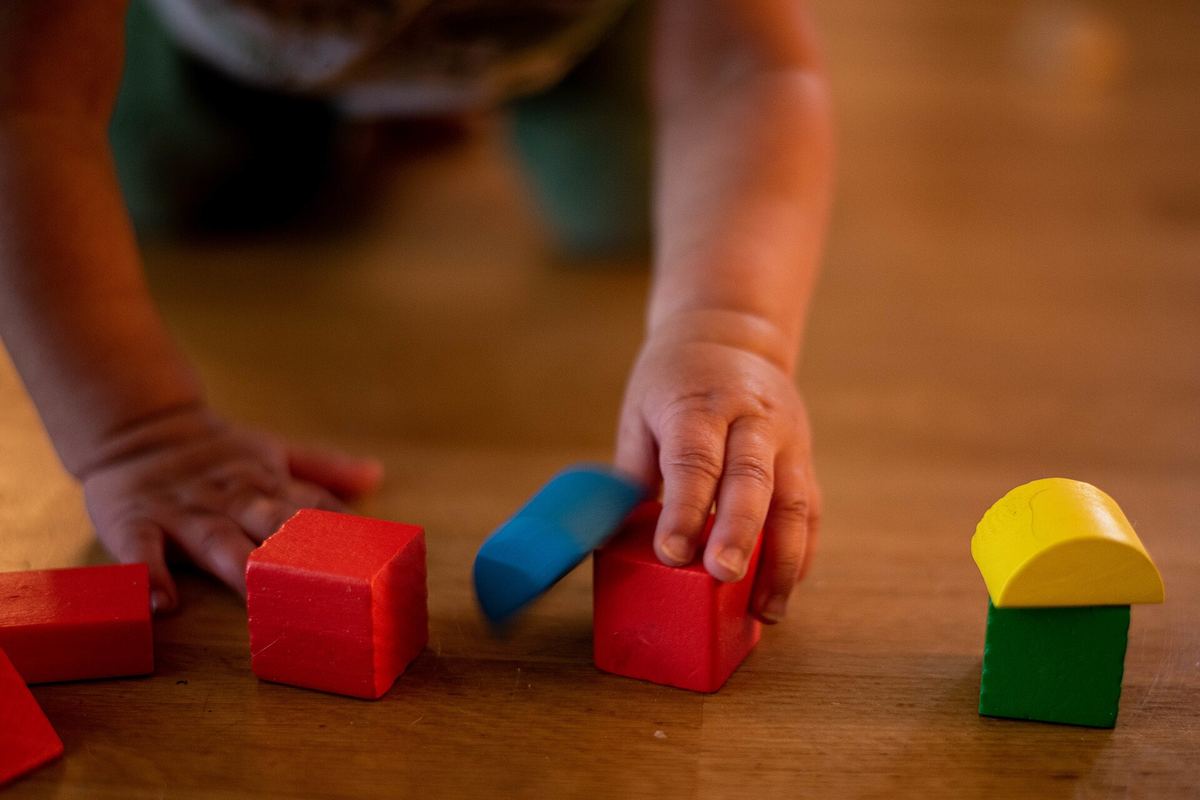
Every sprint uses bowls, blocks, crackers and cards. Real objects, real hands. The only screen belongs to you: a morning plan and a 30-second evening log.
For your child
Fifteen minutes of focused play at their exact edge, four times a day. The rest of the day stays a childhood.
For you
Open the phone. Read the setup line. Run the drill. Log the result at night and tomorrow adjusts itself. No lesson planning, ever.
The whole system fits in your pocket
The morning plan, the 30-second evening debrief and the mastery map live in the Wedgetail app for iPhone and Android. About five minutes of your day, and the only screen anywhere in the loop.
Founding families also get the full platform in any browser, with the same account.
Join the waiting list
Places open in small batches, in order. The earlier a child starts, the cheaper excellence is to build, so a waiting-list position is worth more every month you hold it.
You're on the list.
Places are offered in order, and we will email you when yours opens. Every founding family gets a real conversation before anything is paid.
While you wait, see what a day actually looks like. A day in the loop.